

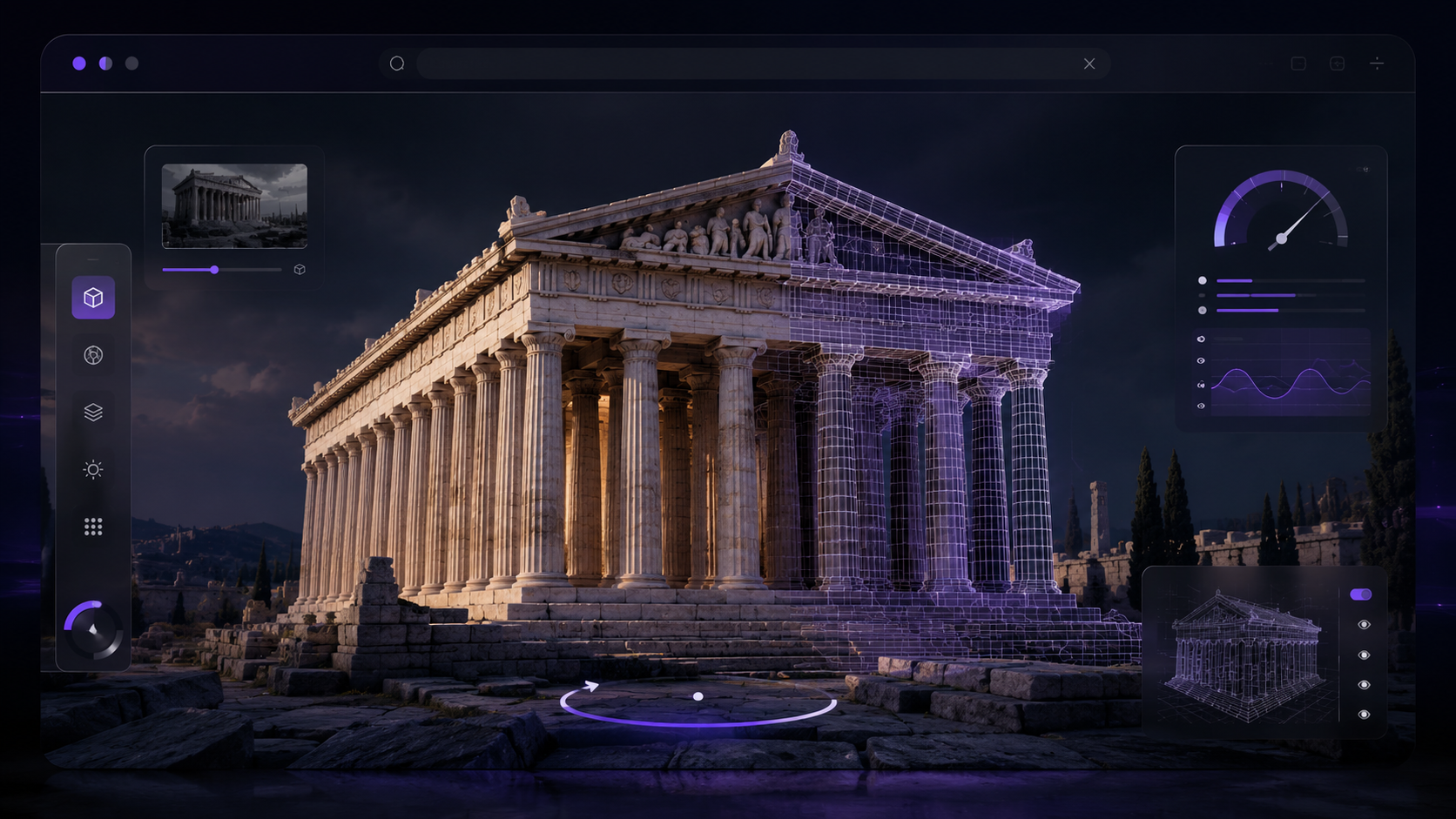
The immersive web — real-time 3D, WebGL and augmented reality in the browser — has become in 2026 one of the most powerful engagement and differentiation levers available to brands, on one condition: never sacrifice performance. The 2026 question is no longer “can we run 3D in a browser?” — we know we can, and it is happening at scale — but “how do we do it without wrecking loading speed, mobile and search rankings?”. A poorly optimised immersive experience loses the user before it ever impresses them: past 2.5 seconds of loading, bounce rates climb sharply (web.dev / Google). Conversely, light 3D that performs can lift scroll depth and session duration. Everything hinges on that tension: immersion against performance — and that is exactly where expertise decides the outcome.
In short — the immersive web in 2026, the essentials
- Definition: real-time 3D (WebGL / WebGPU via Three.js, React Three Fiber), spatial depth, scroll-driven animation and WebAR with no app download — not to be confused with a video or a simple parallax.
- Why now: “light” 3D has gone mainstream; product configurators, AR try-on, brand sites and cultural mediation all use it to drive engagement.
- The trap: oversized 3D assets mean slow loading, mobile brought to its knees, degraded Core Web Vitals (LCP, INP) and an SEO penalty.
- The fix: geometry compression (Draco, −90% to −95%), KTX2/Basis textures (~10× less GPU memory), LOD, lazy-loading, streaming and a graceful fallback.
- The golden rule: immersive work must serve the business (product understanding, conversion, recall), not decoration.
What is the immersive web in 2026?
The immersive web means a web experience that delivers a sense of depth, space and real-time interaction, straight in the browser, with no app to install. In practice it rests on real-time 3D rendered by the GPU (via WebGL, and increasingly WebGPU), objects the user can rotate and inspect, scroll-driven animation, spatial audio and layout, and web-based augmented reality (WebAR) that places an object at true scale in the user's own environment.
It must be separated from what merely looks like it: a video (linear, non-interactive), a parallax (images offset on scroll) or a 2D animation are not the immersive web. What makes an experience immersive is real-time interaction with a three-dimensional scene: the user acts, the scene reacts instantly.
Why is the immersive web taking off in 2026?
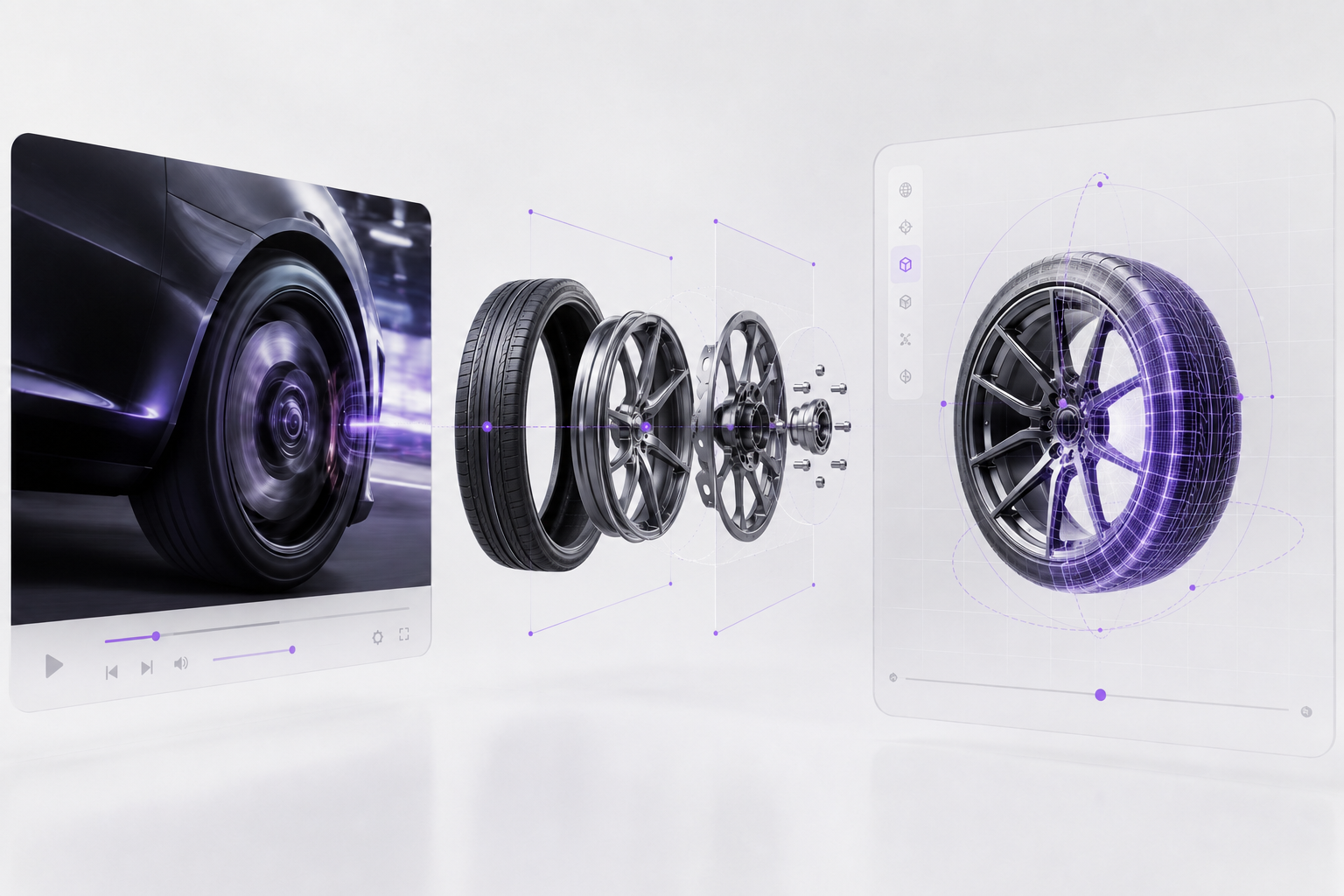
Because 3D in the browser has become accessible, mainstream and “light”. Libraries such as Three.js, Babylon.js and React Three Fiber put real-time 3D within reach of web teams, with no game-engine expertise required, and tools such as Spline allow scenes to be composed without a large CG production team (Tilda, MDX). The result: product configurators, interactive data visualisation and brand experiences with genuine spatial depth are becoming standard.
On the usage side, two engines drive the momentum. First, 3D product visuals in e-commerce: according to figures reported by Shopify, shoppers who interact with a 3D model are roughly 27% more likely to place an order, and those who view a product in AR 65% more likely to buy (Shopify). Second, augmented reality: the global AR/VR market is estimated at around $75 billion in 2025, heading for $119 billion in 2026 (Kivicube). Immersive work is no longer a demo gimmick: it is a measurable engagement and conversion lever.
Does 3D always slow a site down?
No — 3D only slows a site down when it is badly optimised. That is the central point in 2026: sophisticated interaction and excellent performance scores can absolutely coexist, provided the experience is held to a performance budget from the design stage. The trap is not 3D itself, but raw assets: an uncompressed model, heavy PNG/JPEG textures, a script that blocks page rendering.
The stakes are commercial, not merely technical. Google measures experience through the Core Web Vitals, which weigh on both search rankings and conversion:
- LCP (Largest Contentful Paint) — the largest element must render in 2.5 seconds or less (web.dev). Beyond that, bounce rises sharply.
- INP (Interaction to Next Paint) — response to interaction must stay under 200 ms (web.dev). In 2026, 43% of sites still fail that threshold: it is the most commonly missed Core Web Vital (corewebvitals.io).
- CLS (Cumulative Layout Shift) — the layout must not jump while the page loads.
Badly handled 3D hits all three head-on: it inflates LCP (large assets to load), degrades INP (3D computation blocking the main thread) and can cause CLS (a canvas inserted abruptly). On mobile, add battery drain, heat and bandwidth. Accessibility matters too: a purely visual, resource-hungry experience shuts out a share of users unless an alternative is planned.
How do you build light 3D that performs?
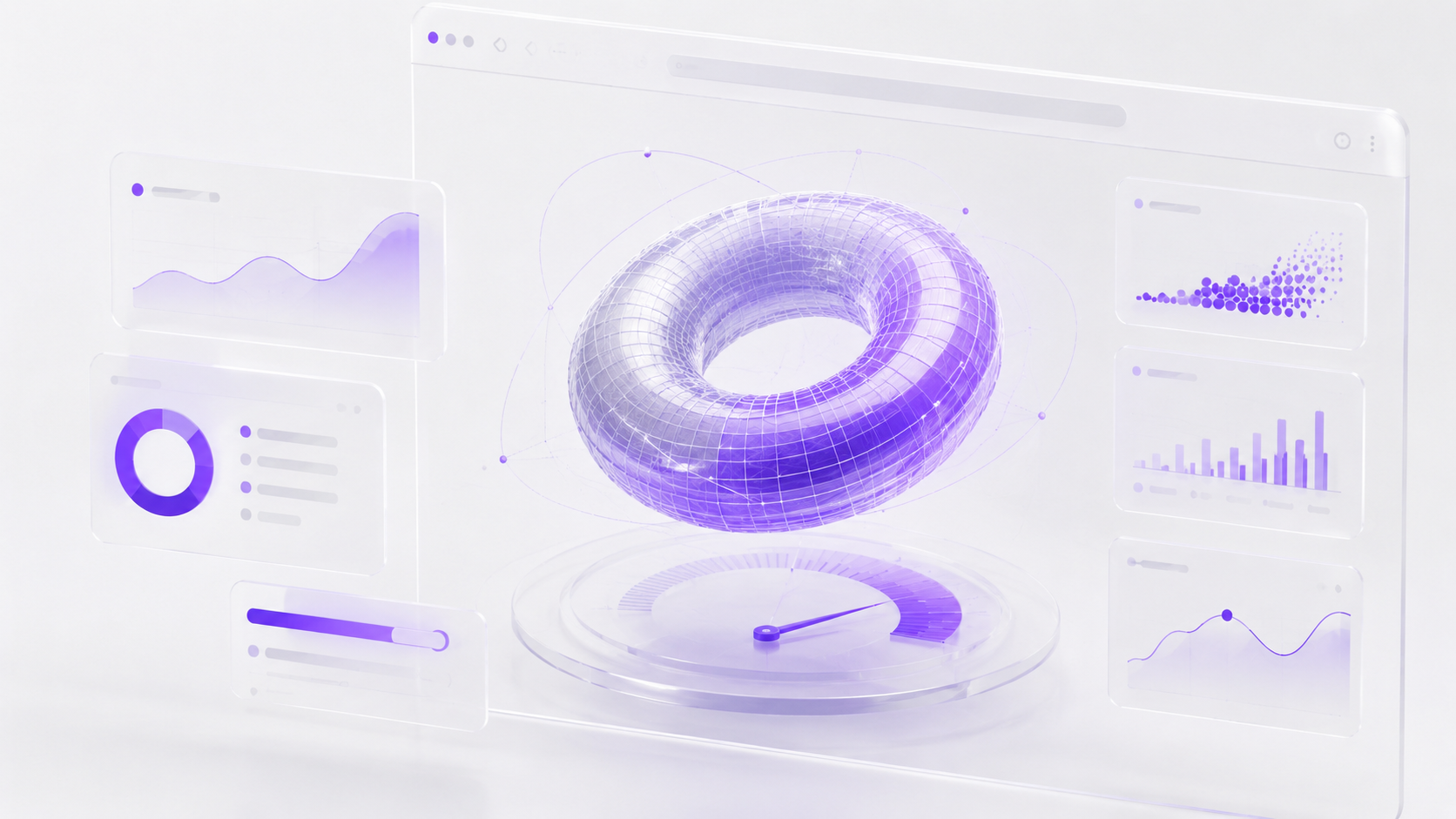
The answer rests on one precise skill: optimise the assets and orchestrate how they load, so the immersive layer is added to the page without blocking what matters. Here are the levers that keep a 3D experience fast, even on mobile.
- Compress the geometry (Draco). Draco compression cuts mesh size by 90% to 95%, and decompression runs in a Web Worker — so it never blocks the main thread (glTF / Khronos).
- Compress the textures (KTX2 / Basis Universal). KTX2 textures stay compressed on the GPU and cut video memory by roughly 10×, whereas a PNG/JPEG decompresses fully into VRAM (a 200 KB PNG can occupy more than 20 MB). Decisive on mobile (Khronos).
- Ship in glTF/GLB. The binary GLB format is the web delivery standard: compact, ready for Draco + KTX2.
- Levels of detail (LOD) and streaming. Load a lighter version first, refine only if needed, and stream only what is visible.
- Progressive loading and lazy-loading. 3D and heavy animation load after critical content, without blocking LCP; the 3D code is imported dynamically once the scene comes into view (mewastudio, web.dev).
- Web Workers. Move heavy computation (physics, decompression) off the main thread to protect INP.
- Graceful fallback. The site must work without WebGL too: an image or a 2D fallback guarantees accessibility and robustness (progressive enhancement).
On the stack side, 2026 marks a turning point: WebGPU is now production-ready in the major browsers (including Safari on iOS), with automatic fallback to WebGL 2 in Three.js — so the new renderer can be adopted without breaking compatibility, for gains of 2× to 10× on complex scenes (utsubo). On the WebAR side, the ecosystem was reshaped in early 2026: the long-standing 8th Wall platform shut down its hosted services (moving to open source in February 2026), which redraws the tooling map. The open WebXR standard is advancing (full support on Chrome/Edge/Android), with one persistent caveat: Safari does not yet support WebXR, which forces fallback strategies on iOS (Kivicube, Hovarlay). AR tooling is moving fast, so the technical building block must be decided project by project.
Which immersive use cases deliver real ROI for brands?
Immersive work creates value when it helps people understand, picture themselves in a situation or decide — not when it decorates. Here are the high-return uses and the business benefit attached to each.

Product visualisation is the best-documented case. IKEA, with its AR app, reports 98% purchase confidence among users who place a piece of furniture at scale in their home, against 85% without AR (Renascence). In furniture as in automotive, seeing the object “for real” before buying removes doubt — and doubt is what makes a basket get abandoned.
Is immersive good or bad for SEO?
Neither by nature: execution decides. A fast, accessible, properly served 3D experience is neutral or even favourable for SEO (it increases time on page and engagement, both positive signals). Heavy 3D that degrades the Core Web Vitals penalises rankings and conversion.
Three rules so that immersive serves SEO instead of sabotaging it:
- Indexable content must exist in HTML. Headings, copy and metadata must not be locked inside the WebGL canvas — search engines do not read a 3D scene.
- 3D loads after critical content. LCP must rest on a light element (text or an optimised image), not on the scene render.
- Plan a fallback. A WebGL-free version keeps content available to crawlers and to users on modest devices.
When does immersive make sense — and when should you skip it?
The anti-gimmick test is simple: immersive must answer a precise business objective (product understanding, conversion, recall, showcasing heritage). If all it brings is decorative wow, it costs performance without returning value.
Worth remembering — 3D makes sense when…
- the product gains from being handled (configuration, materials, scale);
- the user needs to picture it in place (AR: “will it fit / will it suit me?”);
- the experience has to stay in people's minds (brand, event, mediation);
- … and the performance budget holds on mobile.
Skip it when the need is purely informational, when the audience is mostly on constrained networks or devices, or when the effect would be gratuitous. One well-placed 3D scene has more impact than a page saturated with effects.
Why does a successful immersive experience demand two skill sets?
Because an immersive experience that performs sits at the intersection of creative work and engineering. On one side, immersive art direction: what you show, how you tell it, where the emotion sits. On the other, WebGL engineering and a performance culture: asset compression, render budget, fallback, Core Web Vitals measurement. A beautiful scene that stutters is a failure; a hyper-optimised scene with no creative intent leaves no mark. You need both.
That is exactly the dual capability of METASENSE, a Creative Tech agency based in Vélizy-Villacoublay: we design (strategy, creative, art direction) and we build (WebGL development, optimisation, deployment) in house. Two concrete proofs of this “3D that performs at scale”:
- Nemausus — Nîmes-la-Romaine (with Aura, formerly EDEIS, for the City of Nîmes): a multilingual 3D WebGL web app, opened from a simple QR code with no download, with 3D exploration of the monuments (the Arena, the Tour Magne, the Maison Carrée), AI-enriched storytelling, augmented reality, gamification and a custom-built CMS. The experience held thousands of simultaneous connections — proof that ambitious immersive work can stay robust and fast at the scale of a city.
- Kia (via RYM / dealer group Edenauto): a 3D WebGL configurator paired with Web AR to view the vehicle at real size, alongside a viral FOOH campaign (CGI), in service of drive-to-store. Here immersive feeds the purchase decision and dealership footfall directly.
To go further on 3D and AI in showcasing heritage, read our article Digital cultural mediation: 3D, AI and immersive experiences for heritage. And if your priority is first and foremost a site that converts, see Building a website in 2026: a fast site that generates leads — immersive is only worth anything on fast foundations.
Checklist: an immersive experience that performs
Before launching (or signing off) an immersive web project, run through these points:
- Clear business objective — immersive serves understanding, conversion or recall, not decoration.
- Defined performance budget — target LCP ≤ 2.5 s, INP ≤ 200 ms, mobile included.
- Optimised assets — compressed geometry (Draco), KTX2/Basis textures, GLB delivery, LOD.
- Orchestrated loading — lazy-loading, dynamic import, 3D after critical content, Web Workers.
- Indexable content in HTML — nothing essential locked inside the canvas.
- Graceful fallback — a WebGL-free version, accessibility planned for.
- Current stack — WebGL/WebGPU with fallback, WebAR/WebXR chosen for the audience (watch iOS/Safari).
- Continuous measurement — Core Web Vitals tracked after go-live, not only during testing.
Let's design your immersive experience (one that actually performs)
A successful immersive web experience does not pit emotion against performance: it brings them together. That is our craft — from ideation to real-time 3D, through to optimisation and deployment. METASENSE is a Creative Tech agency based in Vélizy-Villacoublay that designs AND builds your immersive experiences, from product configurators to augmented cultural mediation.
Explore our mediation & immersive expertise · Talk to us about your immersive project
FAQ — Immersive web, 3D and WebGL in 2026
What is the immersive web?
The immersive web is a web experience that delivers a sense of depth, space and real-time interaction straight in the browser, with no app. It rests on real-time 3D (WebGL/WebGPU), scroll-driven animation and web-based augmented reality (WebAR). It is distinct from a simple video or parallax, which are not interactive in 3D.
Does 3D always slow a website down?
No. 3D only slows a site down when it is badly optimised. With asset compression (Draco for geometry, KTX2 for textures), progressive loading and a fallback, you can combine 3D interaction with excellent Core Web Vitals. The trap is not 3D itself, but raw models and textures that are far too heavy.
What are WebGL and Three.js?
WebGL is the technology that renders real-time 3D in a browser using the GPU. Three.js is the most widely used JavaScript library for building those 3D scenes without writing low-level GPU code. React Three Fiber brings it into the React ecosystem. In 2026, WebGPU is taking over, with automatic fallback to WebGL.
Can you do augmented reality without an app (WebAR)?
Yes. WebAR runs directly in the phone's browser, via a link or a QR code, with no app to download. The user places a 3D object at scale in their real environment. The ecosystem shifted in 2026 (8th Wall shut down its hosted services), and the open WebXR standard is advancing, still with limits on iOS/Safari.
Is 3D good or bad for SEO?
Neither by default: it all comes down to execution. Fast, accessible 3D is neutral to favourable (more time on page, more engagement). Heavy 3D that degrades the Core Web Vitals penalises SEO. The key rule: indexable content must exist in HTML rather than being locked inside the canvas, and 3D loads after critical content.
What are the Core Web Vitals and why do they matter for immersive?
The Core Web Vitals are Google's experience metrics: LCP (loading ≤ 2.5 s), INP (responsiveness ≤ 200 ms) and CLS (visual stability). They influence both SEO and conversion. Badly handled 3D degrades all three. That is why an immersive experience must be designed with a performance budget from the outset.
What are Draco compression and the KTX2 format?
Draco compresses the geometry of 3D models and cuts their size by 90% to 95%, without blocking the browser. KTX2 (with Basis Universal) compresses textures and cuts GPU memory by roughly 10× compared with a PNG or JPEG. Combined with the GLB format, they are the 2026 standard for shipping light, fast web 3D, especially on mobile.
Does 3D work well on mobile?
Yes, if it is optimised. Mobile adds constraints: bandwidth, battery, heat, a more modest GPU. The levers are asset compression, levels of detail (LOD), lazy-loading and a 2D fallback. WebGPU, now available on Safari iOS as well, improves performance, but a fallback strategy remains essential.
When does an immersive experience genuinely make sense?
When it helps people understand, picture themselves in a situation or decide: configuring a product, seeing it at scale in AR, showcasing heritage or making a brand memorable. If the effect is purely decorative, skip it. One well-placed 3D scene has more impact than a page saturated with effects that wreck performance.
What does an immersive web experience cost, and how long does it take?
The budget depends on the ambition: a 3D configurator, a WebAR activation or a full immersive web app do not carry the same scope (modelling, development, optimisation, integration). METASENSE publishes no rate card and prices each engagement individually, framing objectives, scope and performance budget from the first meeting.
Which tools are used to build immersive web experiences in 2026?
The common stack: Three.js, React Three Fiber and Babylon.js for real-time 3D, WebGL and WebGPU for rendering, Spline for composing scenes, glTF/GLB with Draco and KTX2 for asset optimisation, and WebAR/WebXR solutions for AR. The choice is made project by project, according to audience, devices and performance constraints.
Does METASENSE design immersive web experiences?
Yes. METASENSE is a Creative Tech agency based in Vélizy-Villacoublay, specialising in 3D, WebGL, WebAR and immersive experiences. Its dual capability — immersive art direction plus WebGL and performance engineering — delivered the Nîmes-la-Romaine 3D web app (thousands of simultaneous connections) and the 3D + AR configurator for dealer group Edenauto (Kia).
Sources
- web.dev (Google) — Largest Contentful Paint (LCP) and Interaction to Next Paint (INP)
- Core Web Vitals — What Are the Core Web Vitals? (2026)
- Khronos Group — KTX 2.0 Textures Enable Compact glTF 3D Assets
- Utsubo — 100 Three.js Tips That Actually Improve Performance
- Utsubo — What's New in Three.js (2026): WebGPU
- Kivicube — AR After the 8th Wall Shutdown: 2026 WebAR Guide
- Tilda Education — Web Design Trends 2026
- MDX — Best 3D Websites of 2026
- Renascence — How IKEA Uses Technology to Improve CX in Retail
- Mewa Studio — SEO & Core Web Vitals 2026