

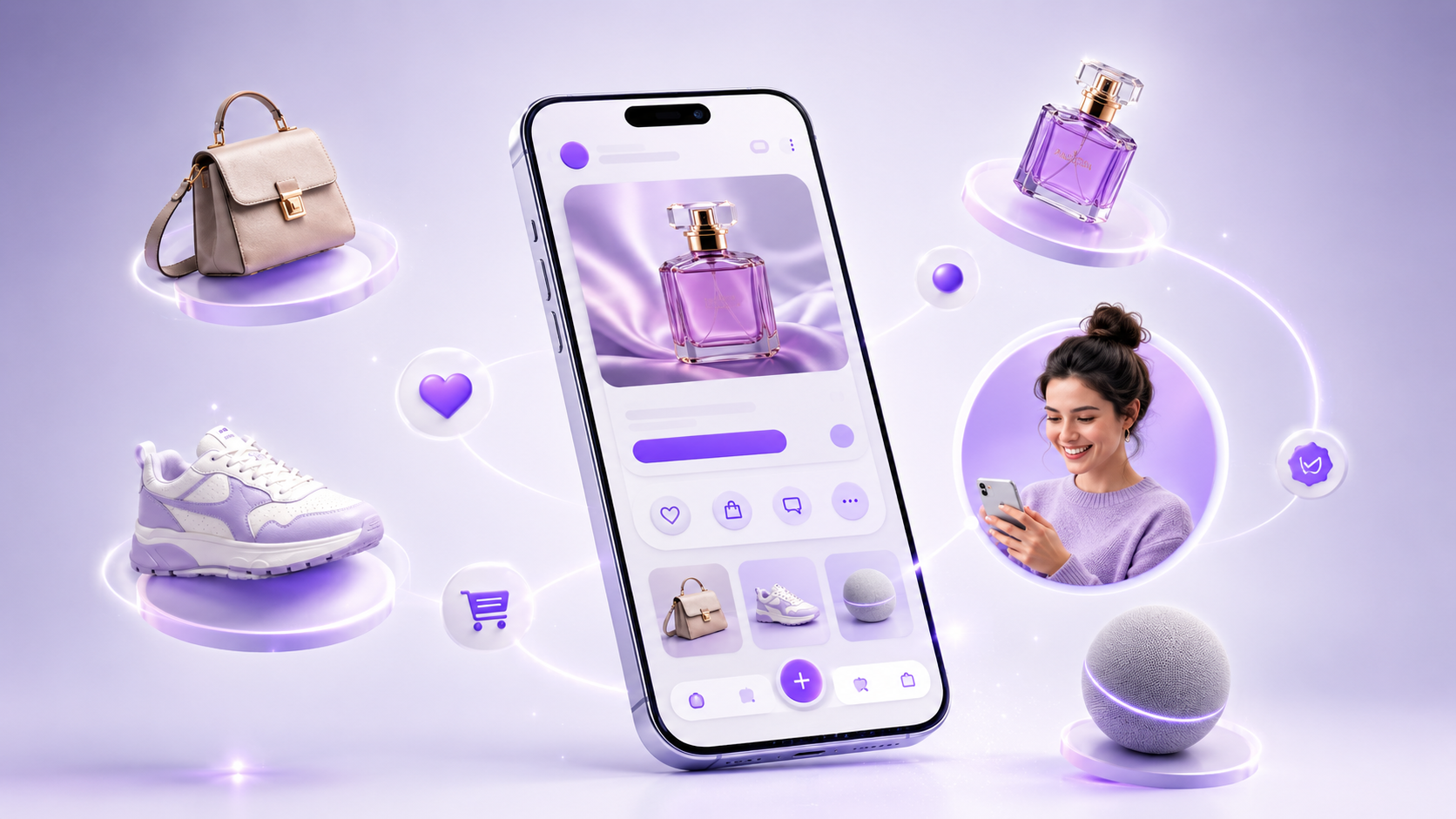
RCS marketing means using RCS (Rich Communication Services) — the rich native messaging standard that succeeds SMS — to engage customers straight inside their messaging app, with a verified brand, visuals, buttons and interaction. Where SMS stops at 160 characters of plain text, RCS turns the message thread into a branded conversational experience: carousels, instant-win games, suggested replies, read receipts. With RCS arriving on iPhone (iOS 18), the channel finally becomes universal — and the subject unavoidable for marketers.
At METASENSE, a Creative Tech agency based in Vélizy-Villacoublay, we have been designing engagement experiences for years: game kiosks, Web AR, instant-win mechanics wired into the CRM. For us RCS is not "SMS with nicer graphics": it is a new owned channel to run game and relationship mechanics where attention is strongest. This guide explains what RCS is, what separates it from SMS, its gamified use cases, and how to get started properly.
In short
- RCS is the rich native messaging standard replacing SMS: visuals, buttons, verified brand, two-way conversation.
- Adoption turns decisive in 2026: around 3.8 billion RCS users expected by the end of 2026 (Juniper Research), and RCS on iPhone (iOS 18) makes the channel close to universal.
- The marketing stake is not the "good-looking message", it is conversational engagement: turning a notification into an interaction (game, quiz, booking, vote, repeat purchase).
What is RCS (Rich Communication Services)?
RCS (Rich Communication Services) is a rich mobile messaging protocol that replaces SMS and MMS inside the phone's native messaging app. Driven by the GSMA operator association through its Universal Profile specification, it carries far more than text: images, videos, carousels, action buttons, suggested replies and read receipts — with no third-party app to install.
For brands, the channel is called RCS Business Messaging (RBM): the professional version, run through technical partners (CPaaS providers such as Sinch, Infobip or Dolist) and approved by Google. The major difference with SMS: the sender is verified. The brand profile displays your logo, your name and a certified verification tick that cannot be spoofed — a direct barrier against SMS phishing ("smishing").
In practice, RCS brings three things SMS never could:
- Brand identity: logo and verified name in the thread, instead of an anonymous short code.
- Richness: rich cards (image, title, description), horizontal carousels, tappable buttons (up to 11 suggestions per message on Google RBM), video.
- Conversation: the customer can reply, tap a button, trigger an action — the brand receives the event and can follow up.
Why is RCS taking over from SMS?
RCS succeeds SMS because it combines the native reach of SMS — opening straight in the phone's messaging app, with no download — with the richness and interactivity of a chat application. SMS remains universal but frozen: 160 characters, no reliable image, no brand, no interaction. RCS lifts those limits while keeping the decisive advantage of a native channel: it is already on the user's phone.
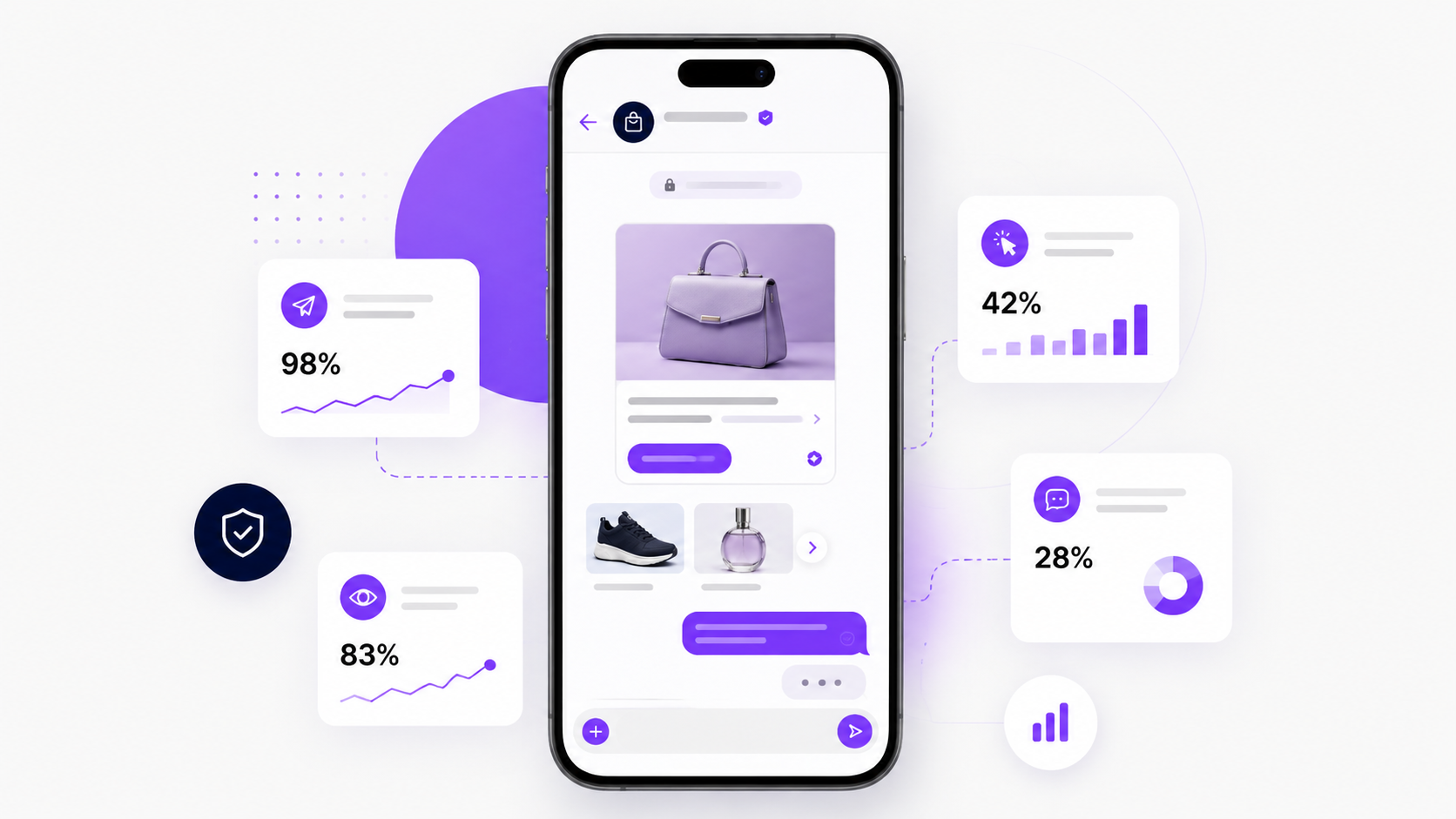
Two shifts make 2026 a pivot year:
- Apple joins in. With iOS 18 (announced at WWDC 2024, rolled out through 2024-2025), the iPhone finally supports RCS. In France the rollout widened with iOS 18.4 and the arrival of the operators (Orange, SFR, Bouygues). The blue bubble / green bubble divide is over: RCS becomes interoperable between Android and iPhone.
- Scale. Juniper Research put the RCS base at 1.1 billion users in 2024, projected to reach around 3.8 billion by the end of 2026. Google reports more than one billion RCS messages sent per day in the United States alone. In France, Orange reported a rise of around 400% in RCS traffic over one year.
For a brand, this means a channel that was fragmented until now becomes a mass addressable audience — at the exact moment when paid acquisition costs are soaring and attention on email is eroding.
SMS vs RCS: what actually differs?
The difference fits in one sentence: SMS notifies, RCS engages. SMS pushes text; RCS opens an interactive brand conversation. Here is the comparison we use to frame a client project.
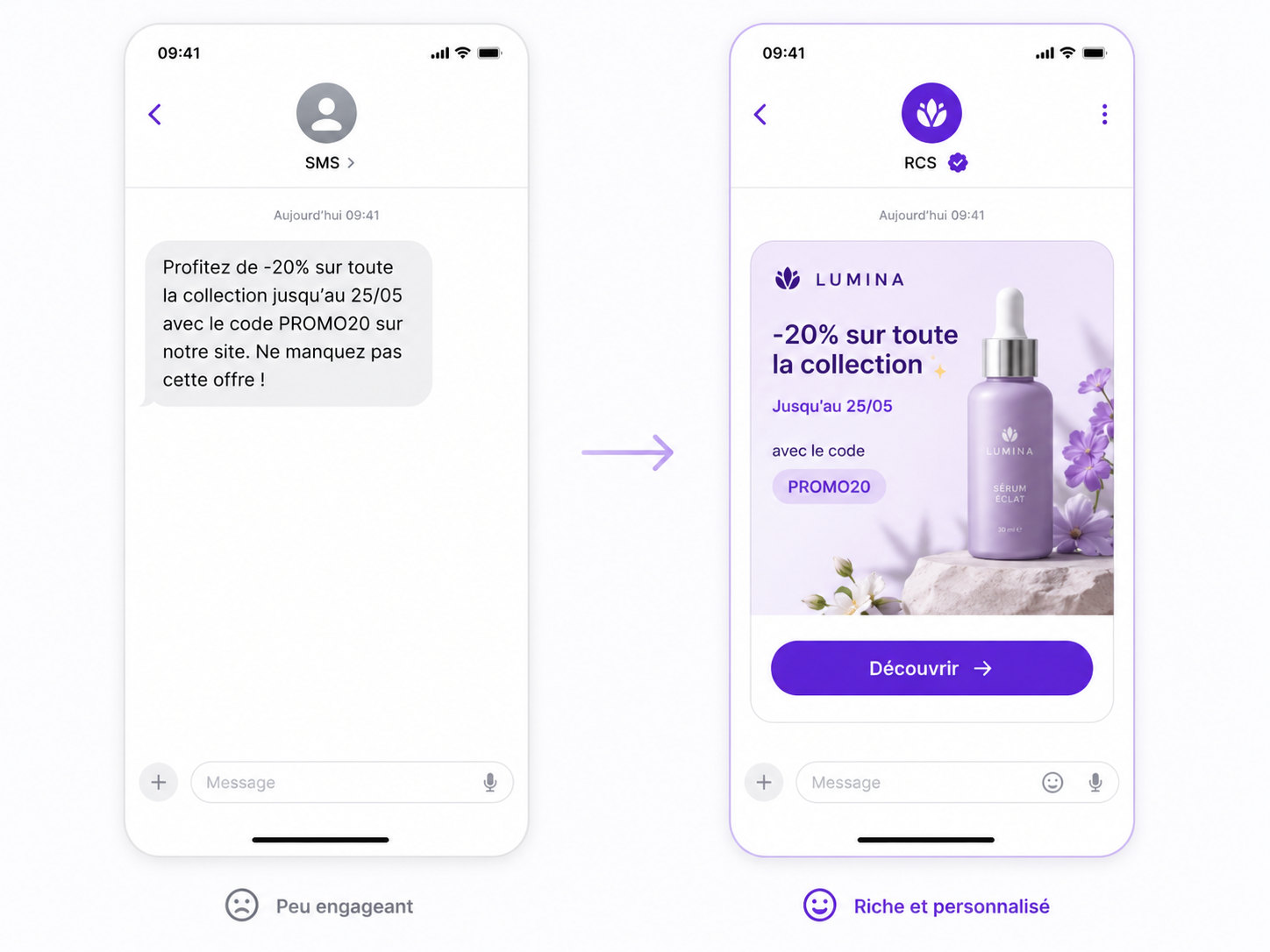
On performance, vendors publish high figures that deserve caution: Infobip reports open rates of around 72% and engagement up to 10× that of SMS, with click-through rates of 15-30% depending on the campaign. These are vendor averages, to be confirmed against your own base — but the trend is clear: rich formats convert better than plain text.
Key point: RCS does not kill SMS, it builds on it. If the recipient does not support RCS, the message switches automatically to SMS (fallback). You do not migrate, you enrich step by step.
Which gamified marketing use cases suit RCS?
The real potential of RCS marketing is not the "good-looking message": it is turning messaging into a space for play and relationship, straight in the customer's pocket. This is exactly METASENSE territory — engagement through game mechanics — carried onto a new channel. A few high-engagement use cases:
- Conversational instant win: "Tap to scratch" inside the RCS thread, animated reveal, prize, then a "Collect in store" button (drive-to-store). The instant-win mechanic we deploy on kiosks and Web AR, transposed into messaging.
- Quizzes & interactive polls: suggested replies as buttons, scoring, and a personalised product recommendation at the end.
- Live voting and participation: let a community vote through buttons, in real time, with read receipts.
- Catalogue carousel: scroll through products as rich cards, each card carrying an "Add" or "Reserve" button.
- Repeat purchase & loyalty: personalised reminder plus a one-tap "Reorder" button; conversational basket recovery.
- Booking and reservation: a sequence of buttons to pick a slot without leaving the messaging app.
- Conversational agent (a customer-facing feature): an assistant built into the RCS thread that answers, qualifies and routes — an AI feature designed for the customer, not a gadget.
The common thread: every message becomes a micro interactive journey connected to your CRM, your customer identity and your data. That is where RCS goes beyond SMS — and precisely the "engagement experience" approach rather than "mass sending".

Worth remembering
Do not think of RCS as "a sending channel" but as an owned conversation channel. The question is not "what message do I send?" but "what interaction do I trigger?". That shift in posture — from notification to play — is what separates decorative RCS from RCS that engages and converts.
How do you launch an RCS marketing campaign? (six steps)
Launching RCS marketing follows a clear path: verify your brand, choose a technical operator, design a conversational mechanic, handle consent, plan the SMS fallback, then measure and iterate. Here are the steps we recommend.
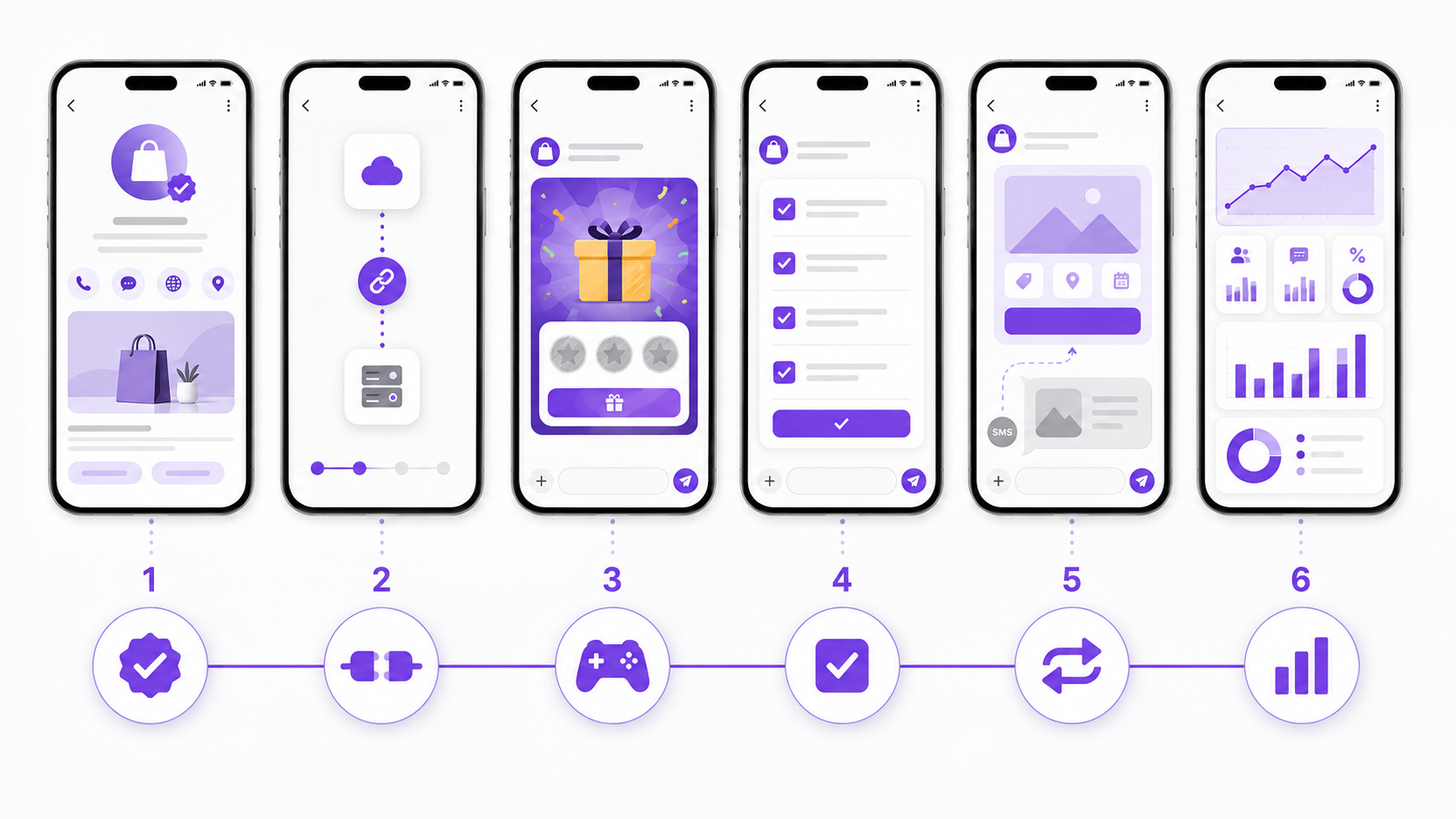
- Get your brand verified (RBM agent). Create the brand profile (logo, name, colours) and have it verified by Google or the partner. This is what unlocks the trust tick.
- Choose a technical partner (CPaaS). Sinch, Infobip, Dolist or equivalent: they handle sending, operator connectivity and fallback. The choice depends on your stack and your volume.
- Design the conversational mechanic. This is the decisive creative step: not a message, a journey (game, quiz, carousel, booking) connected to your CRM and your customer identity.
- Handle consent (GDPR). RCS marketing falls under the same rules as SMS: prior opt-in, clear brand identification, simple unsubscribe, and compliance with the legal sending hours in France.
- Plan the SMS fallback. Define the fallback message for recipients without RCS support, so deliverability stays at 100%.
- Measure and iterate. Track not only deliverability, but read, click and reply rates. RCS finally gives a measurement loop close to email — use it to refine the mechanic.
What RCS changes for brands (and for customer relationships)
RCS gives brands back a direct, measurable and owned channel — a rare thing in the age of paid advertising platforms. Where social networks and digital advertising rent you an audience, RCS rests on an opt-in base you own, on the most consulted channel of the phone. Three implications:
- Trust restored. The verified brand reduces phishing and gives credibility back to a channel eroded by SMS spam.
- Measurable engagement. Read, click, reply: you leave the SMS "black box" for measurement you can act on.
- A richer relationship. RCS becomes a recurring touchpoint where you play, advise and take bookings — not just a promotional pipe.
The risk runs the other way: repeating the failings of mass SMS (over-solicitation, purely promotional messages) on a more intimate channel. RCS amplifies whatever you put into it. Done well, it builds loyalty; done badly, it tires the audience faster than SMS.
The METASENSE view: RCS as an engagement channel, not a pipe
At METASENSE we approach RCS from our own discipline: engagement experiences. Our evidence sits on adjacent channels, but the logic is strictly the same — connect a game mechanic to data and customer identity to generate measurable interaction.
- For Gocad, we designed phygital kiosks and a Web AR game connected to a proprietary platform, deployed in stores: over 6,000 participants.
- The mechanic is always the same: a personal code opens the game experience, tracking ties each entry back to its touchpoint, and the CRM turns the interaction into usable data.
These mechanics — instant win, quiz, drive-to-store, CRM-linked scoring — transpose to RCS. That is how we read the channel: not one more sending tool, but a conversational space for the engagement experiences we already design. The dual advisory and creative role applies here as elsewhere: we design the mechanic and we build it, from idea to rollout.
Transparency: to date METASENSE does not claim a delivered RCS campaign as a public reference. Our position on RCS is market expertise grounded in real engagement work on adjacent channels (kiosks, Web AR, CRM platforms).
Let's talk about your project
Do you want to turn RCS into a genuine engagement lever — not yet another promotional pipe? METASENSE designs and deploys conversational engagement experiences connected to your CRM, your brand identity and your data.
→ Let's talk about your project: we frame the mechanic, the channel and the measurement.
To go further: explore our engagement & gamification experiences, our kiosk and Web AR setup for Gocad: over 6,000 participants and our 3D and AR drive-to-store campaign for Kia, for dealer group Edenauto.
FAQ — RCS marketing
What is RCS in marketing?
RCS marketing is the use of Rich Communication Services — the rich native messaging standard that succeeds SMS — to engage customers with a verified brand, visuals, buttons and interaction. The professional version is called RCS Business Messaging (RBM), run through a technical partner approved by Google.
What is the difference between SMS and RCS?
SMS is limited to 160 characters of plain text, one-way and with no brand identity. RCS adds images, video, carousels, tappable buttons, a verified brand and two-way conversation. In short: SMS notifies, RCS engages. RCS switches automatically to SMS if the recipient does not support it.
Does RCS work on iPhone?
Yes. Since iOS 18 (announced at WWDC 2024), the iPhone supports RCS, and the rollout widened in France with iOS 18.4 and the operators Orange, SFR and Bouygues. RCS is now interoperable between Android and iPhone, which removes the historic blue bubble / green bubble divide.
How many users does RCS have?
According to Juniper Research, the RCS base stood at around 1.1 billion users in 2024 and should reach close to 3.8 billion by the end of 2026. Google reports more than one billion RCS messages sent every day in the United States alone. In France, more than 80% of the mobile install base is compatible.
Is RCS GDPR compliant?
Yes, under conditions. RCS marketing falls under the same rules as SMS: prior opt-in from the recipient, clear brand identification, simple unsubscribe and compliance with the legal sending hours in France. Consent already obtained for SMS generally covers RCS, but validate each case with your DPO.
Will RCS replace SMS entirely?
Not immediately. RCS relies on SMS through a fallback mechanism: if the recipient does not support RCS, the message switches automatically to SMS. So this is gradual enrichment rather than abrupt replacement. SMS remains the universal safety net.
What are RCS open and click rates?
CPaaS providers report open rates of around 72% and engagement up to 10× higher than SMS (Infobip), with click-through rates of 15-30% depending on the campaign. These are vendor averages: they need confirming against your own base, but they do confirm the advantage of the rich format.
How do you launch an RCS marketing campaign?
In six steps: get your brand verified (RBM agent), choose a technical partner (a CPaaS such as Sinch or Infobip), design a conversational mechanic connected to the CRM, handle GDPR consent, plan the SMS fallback, then measure reads, clicks and replies to iterate.
What is a CPaaS for RCS?
A CPaaS (Communications Platform as a Service) is a technical provider that operates RCS message sending: operator connectivity, brand verification, SMS fallback management and reporting. Sinch, Infobip and Dolist are examples. A brand does not connect directly to the operators; it goes through this partner.
Does RCS cost more than SMS?
The unit cost of an RCS message is generally higher than an SMS, but its stronger engagement can lower the cost per click or per conversion. Rates vary by volume and by partner. At METASENSE we price each engagement individually, according to the mechanic and the business objectives.
Which brands should move to RCS?
B2C brands with a large opt-in base: retail, e-commerce, automotive, services, leisure, media. Any organisation already reaching customers by SMS that wants to turn notification into interaction (game, repeat purchase, booking, loyalty) has good reason to test RCS, starting with one focused use case.
Can an RCS conversation be gamified?
Yes, and it is one of its strongest assets. Buttons, suggested replies, carousels and rich cards make it possible to build instant wins, quizzes, votes or game journeys directly inside the message thread. This is the METASENSE "engagement experience" approach, transposed onto this new conversational channel.