

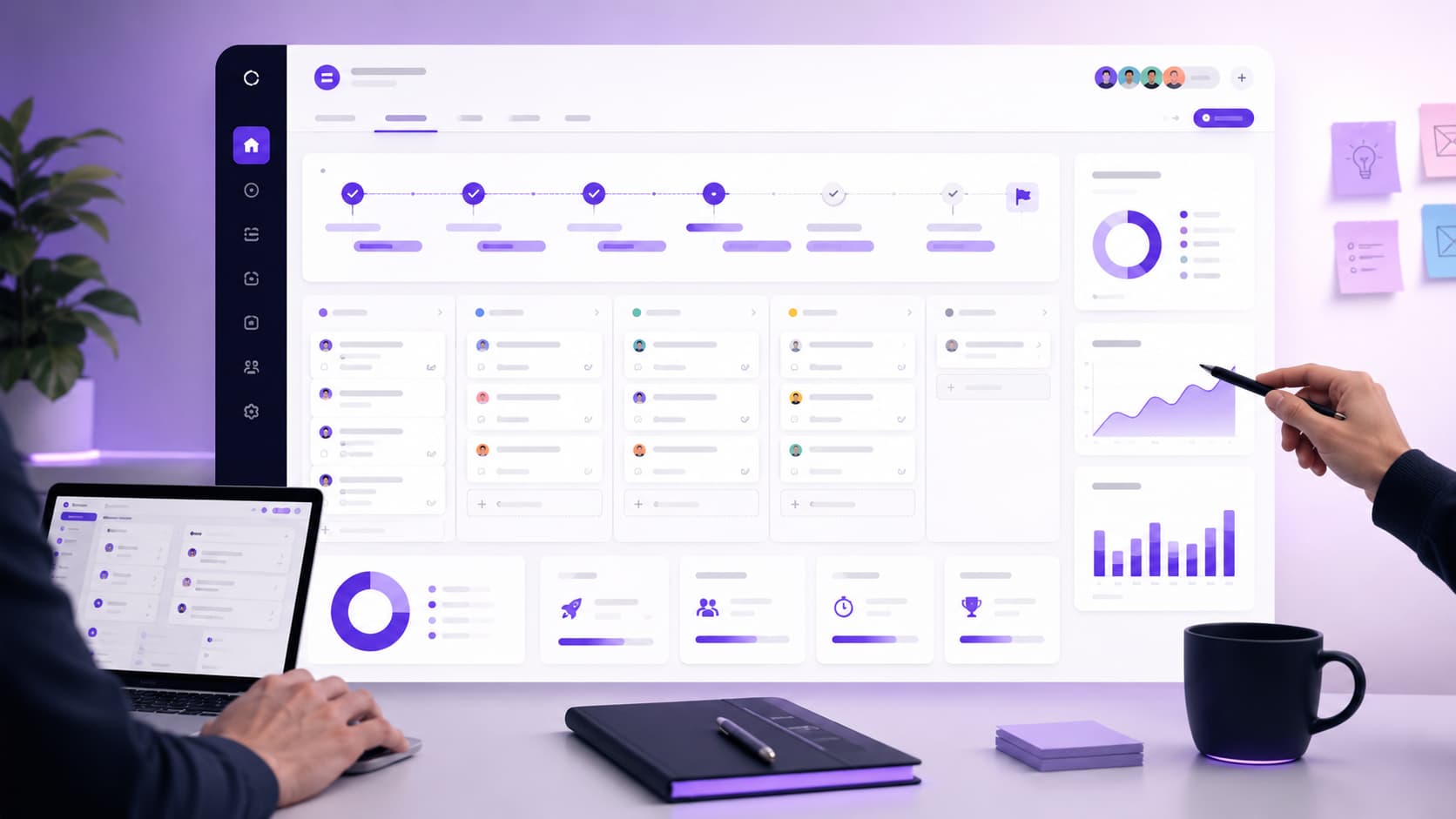
A successful dev agency collaboration runs on method, not luck: rigorous scoping upfront, short sprints, regular checkpoints and full transparency on progress. That discipline is what lets an agency ship a corporate site in 72 hours or a first Webflow site in under two weeks — not a stroke of genius, but a proven mechanism. Conversely, most web projects that go off the rails share the same origin: a vague brief and a badly organised relationship between the client and the dev team.
This article sets out the frictions that recur on web development projects, then how we at METASENSE (based in Vélizy-Villacoublay) structure collaboration to neutralise them. You will also find practical advice on the client side: how to brief, decide and prioritise so you become a genuine partner to your agency.
In short
— 70% of projects fail on at least one criterion (budget, deadline, scope) according to the Standish Group CHAOS report.
— The leading cause of failure is a poorly defined objective upfront (52% of cases, Deloitte study) — not a technical problem.
— Good collaboration is a method: scoping, sprints, regular checkpoints, transparency, velocity.
— On the client side, your role is decisive: brief clearly, appoint one decision-maker, decide fast.
Why do web projects go off the rails (and is the technology really to blame)?
A web project rarely derails because of code: it derails because of collaboration. The industry figures are unambiguous — according to the Standish Group CHAOS report, around 70% of digital projects fail to meet at least one of the three core criteria: budget, deadline or functional scope. And the leading cause is not technical: more than half of projects (52%, Deloitte study) fail because the objectives were never clearly defined at the outset.
In practice, here are the frictions that come back on almost every project that stalls:
- The vague brief. The need is expressed in generalities ("a modern site that converts") with no audience, no prioritised features, no success criteria. The agency fills the gaps with assumptions — and half of them are wrong.
- Scope creep. New requests pile up with no arbitration: every addition pushes back delivery and inflates the budget.
- Endless review rounds. With no structured validation, the same mockup gets redone three times because nobody made the call.
- The phantom decision-maker. On the client side, no single person is empowered to decide: feedback contradicts itself and sign-offs drag.
- Radio silence. The agency works as a black box and the client sees the result too late to fix anything without extra cost.
What these frictions have in common: they are not problems of talent, but of how the collaboration is organised. That is exactly where method changes everything.

What does good collaboration between a client and a web development agency look like?
Good collaboration with a dev agency is a structured partnership in which the client and the technical team build the project together within a clear frame: shared objectives, an arbitrated scope, a defined iteration rhythm and permanent transparency on progress. It is neither passive outsourcing ("I order, I collect") nor improvisation as you go.
Three principles make the difference:
- Building together. The client is not an outside buyer: they take part in the structuring decisions (prioritisation, arbitration, sign-offs) and take ownership of the project. Their teams start proposing, not just requesting.
- A shared cadence. Both sides know the rhythm: when we plan, when we ship, when we validate. Nobody "discovers" the project.
- Radical transparency. Progress, blockers and trade-offs are visible at all times. No black box, no bad surprise at the finish line.
This is the philosophy behind the dual role of METASENSE: we advise and scope (strategy, ideation), and we design, build and deploy in-house. The same partner thinks the project through and delivers it — which removes the information loss between "the people who sell" and "the people who code".
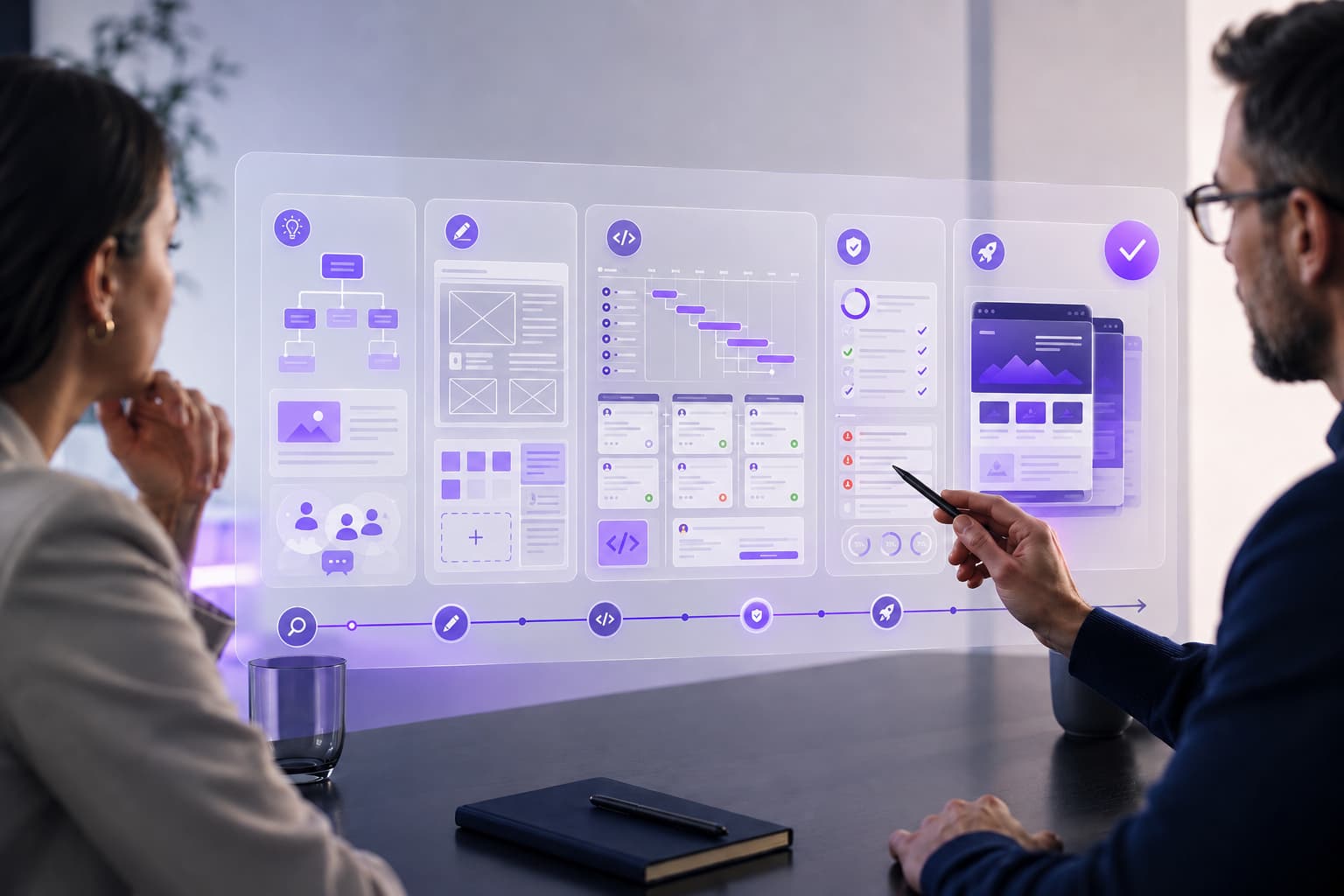
How do you scope a web project to start on solid ground?
Scoping is the stage that prevents 80% of misunderstandings: it turns a vague intention into measurable objectives, an arbitrated scope and a shared roadmap. A well-scoped project costs less and moves faster — not because people work more, but because nothing is redone.
At METASENSE, scoping follows a two-stage sequence:
- Immersion. Audit of what exists, analysis of the business stakes, definition of objectives and success criteria. We look for the "why" before the "how".
- Architecture. Choice of technical stack, prioritised functional specifications, roadmap and milestones. We separate what is essential at launch (the MVP) from what belongs in V2.
Worth remembering — scoping is not paperwork. It is the project's life insurance. Every hour spent clarifying objectives upfront saves several days of back-and-forth downstream. A well-built specification also makes quotes comparable and aligns every stakeholder.
The questions to settle during scoping
| Question | Why it is decisive |
|---|---|
| What is the measurable business objective? | Without a success criterion, there is no way to know whether the project worked |
| Who is the audience and what should they do? | Drives the UX, the content and the priority features |
| Which features at launch, which later? | Prevents scope creep and sets a realistic perimeter |
| Who decides and signs off on the client side? | Removes the phantom decision-maker and speeds up sign-offs |
| What are the milestones and the delivery date? | Sets a rhythm and a shared commitment |
Why do sprints speed up a web project?
Working in sprints speeds up a project because it breaks one large unknown into small deliverables validated as you go: each short cycle produces something concrete that the client sees and approves, which removes the tunnel effect and the end-of-project surprises.
The agile sprint method rests on a simple principle: short cycles, a deliverable at the end of each cycle, immediate client feedback. Concretely:
- Sprint planning — we select the priority tasks from the backlog for the coming cycle.
- Production — the dev team executes, with regular checkpoints and visibility on progress.
- Review — we present the deliverable to the client, who tests it and gives feedback.
- Adjustment — that feedback feeds the next sprint. We correct early, while it is still cheap.
The benefit runs both ways. For the client: they watch the project take shape continuously and stay in control. For the agency: it avoids building for weeks in the wrong direction. Milestones do not vanish in agile — they map to the major releases and the committed delivery dates, which keeps a clear heading.
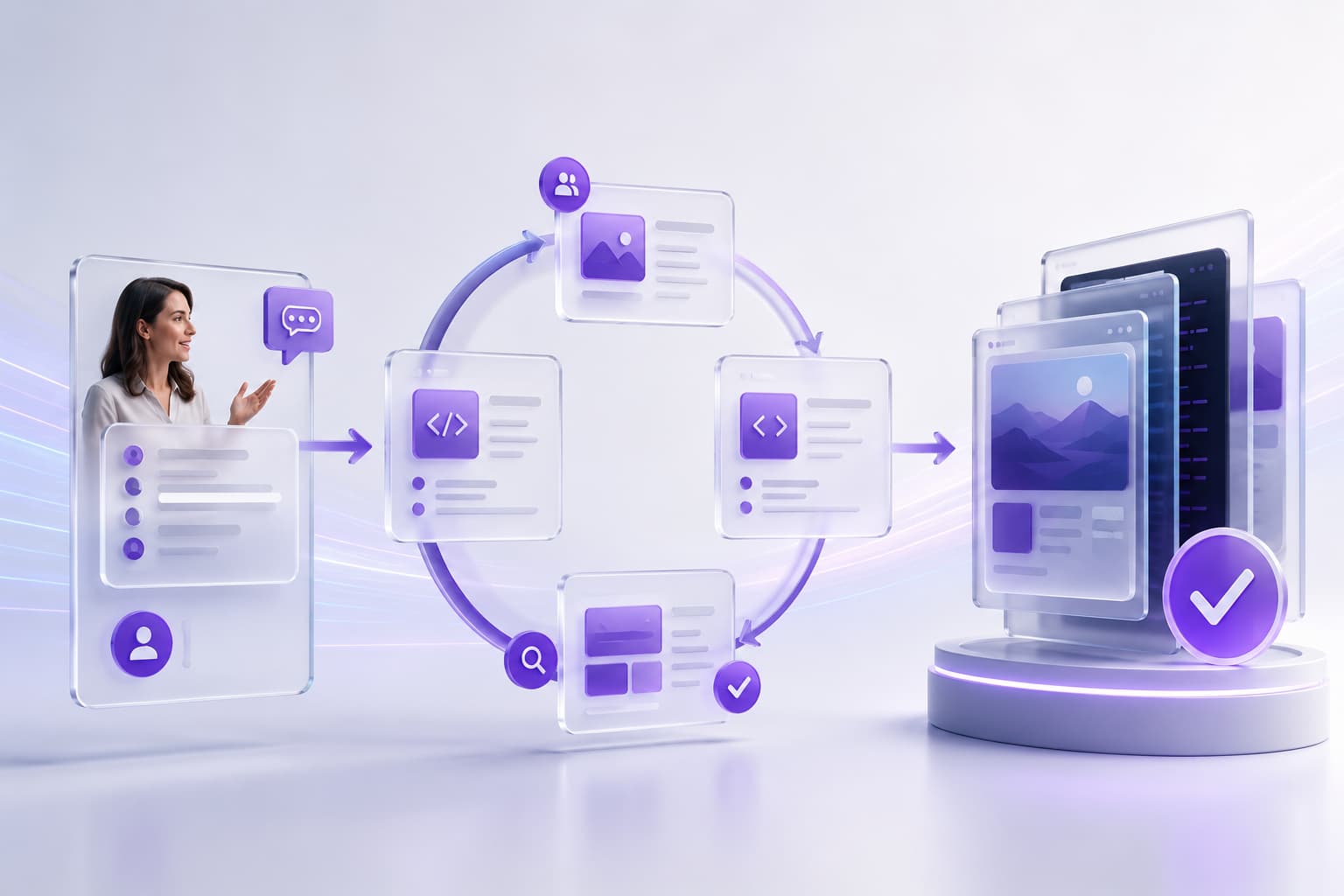
How METASENSE organises collaboration to deliver on time
We organise collaboration around four commitments: scoping upfront, execution in short sprints, regular checkpoints and full transparency — all carried by a team that designs AND builds in-house. That mechanism, not luck, is what explains our execution velocity.
A few concrete proof points from our work:
- CPX Group (international logistics): corporate site shipped in 72 hours (Nuxt + Vercel + headless CMS), which is -75% time against a conventional cycle. A delivery that fast is only possible when scoping, decisions and sign-offs are perfectly oiled with the client.
- Gourand (textiles, a house founded in 1971): a refreshed brand identity and the company's first website, built on Webflow and delivered in under two weeks. Here again, the velocity comes down to friction-free collaboration.
- The RYM platform: a SaaS tool for steering marketing operations and a source of recurring revenue — a long-running project that only holds because the collaboration is durable and structured.
What those figures prove. Velocity is not a shortcut on quality: it is the result of a collaboration where nothing is lost between the idea and the code. When the partner who advises is also the one who builds, you remove the layers of intermediaries, the reinterpreted briefs and the waiting time.
It is on the same foundation that we bring in, when the project warrants it, AI capabilities for our clients: image and video production with generative AI, or custom-built AI features inside their platforms. AI here is a capability serving the client's product, not a gadget.

What is the client's role in the success of a web project?
The client's role is decisive: a web project never succeeds "in spite of" the client, but thanks to their involvement. Projects that meet their deadline, budget and objectives almost always rest on an active client who briefs clearly, decides fast and stays available.
Here is how to be the right partner to your agency:
- Brief on the "why", not only the "what". Give your business objectives, your audience and your success criteria rather than your aesthetic preferences. An agency can translate an objective into a solution; it cannot guess an objective you never stated.
- Appoint one decision-maker. One person empowered to decide and to carry your organisation's consolidated feedback. It is the best antidote to endless review rounds.
- Decide fast and prioritise. Not everything can be "a priority". Accept the split between what is essential at launch and what comes next. That is what protects the delivery date.
- Stay available at checkpoints. Feedback given at the right moment costs a minute; the same feedback given too late costs a sprint.
- Trust the technical expertise. You know your business; the agency knows its own. The partnership works when each side respects the other's ground.
Which tools and rituals make collaboration flow?
Smooth collaboration relies on few tools but clear rituals: a shared tracking space to see progress, a fast channel for exchanges, and regular meetings on fixed dates. The tool is not the method — the ritual is what counts.
- A shared steering space (a task board or backlog) where the client follows progress in real time.
- A direct communication channel for short questions, without drowning the important decisions.
- Checkpoints on fixed dates: sprint review, milestone sign-off, next priorities. Regularity builds trust.
- One named contact on each side: a project lead at the agency, a decision-maker at the client.
The point is not to stack up platforms, but to guarantee that nobody ever learns bad news too late.
Let's talk about your project
A successful web project is not a matter of luck, but of collaboration method. At METASENSE, a Creative Tech agency based in Vélizy-Villacoublay, we scope upfront, execute in sprints and deliver on time — with a team that designs and builds in-house, from advice to deployment.
Do you have a site, a platform or an application to launch or rebuild? Let's talk about your project: we will tell you frankly how we would scope it and at what pace we could deliver it.
Read more:
- Building a high-performing website that generates leads in 2026
- Website rebuild: 7 signs it is time
- Webflow or WordPress in 2026: which technology should you choose?
FAQ — Working with a dev agency and delivering a successful web project
What is a successful dev agency collaboration?
It is a structured partnership in which the client and the technical team build the project together within a clear frame: shared objectives, an arbitrated scope, a defined iteration cadence and permanent transparency. It is neither passive outsourcing nor improvisation. Method beats luck.
Why do most web projects fail?
According to the Standish Group CHAOS report, close to 70% of projects miss one criterion (budget, deadline or scope). The leading cause is not technical: 52% fail for want of objectives clearly defined upfront (Deloitte). The vague brief and scope creep are the recurring culprits.
What is web project scoping?
Scoping is the opening stage that turns a vague intention into measurable objectives, an arbitrated scope and a shared roadmap. It covers the audit of what exists, the definition of business objectives, the choice of stack and the prioritisation of features. It prevents most misunderstandings.
Why does a specification document matter?
A well-written specification clarifies the requirements, makes quotes comparable and aligns every stakeholder. It is the project's compass: it details features, audience and success criteria, and prevents up to 80% of misunderstandings with the supplier.
What is a sprint in web project management?
A sprint is a short, fixed-length work cycle at the end of which the team ships something concrete. The client tests it, approves it and steers the next cycle. This agile approach removes the tunnel effect and allows early correction, while it is still cheap.
How do you avoid endless review rounds on a web project?
By structuring validation: one decision-maker on the client side, consolidated feedback at fixed checkpoints, and a scope arbitrated from the scoping stage. Most review rounds come from a lack of decision, not a lack of talent.
What is the client's role in a web project?
Decisive. An active client briefs on objectives (not only on taste), appoints one decision-maker, decides fast, prioritises and stays available at checkpoints. Projects that hold their deadline and budget almost always rest on that involvement.
How do you brief a web development agency properly?
Start with the "why": business objectives, audience, success criteria. Give the context, the constraints (budget, deadline) and examples of what you like and dislike. Avoid generalities ("modern", "converts well") in favour of concrete, measurable objectives.
How long does it take to build a website?
It depends on the scope. With solid scoping and smooth collaboration, METASENSE shipped a corporate site (CPX Group) in 72 hours and a first Webflow site (Gourand) in under two weeks. A custom-built business platform is counted in weeks instead. Velocity comes from the method.
What is scope creep and how do you avoid it?
Scope creep is the drift of the perimeter: features are added continuously with no arbitration, pushing back deadlines and budget. You avoid it by prioritising from the scoping stage (launch vs V2), arbitrating every new request, and clearly separating the essential from the nice to have.
Does agile suit every web project?
Agile fits web projects particularly well, since their requirements often change. Milestones do not disappear: they map to the major releases and the committed delivery dates. For tightly framed projects, a hybrid approach (firm milestones plus sprints) works very well.
Why choose an agency that designs and builds in-house?
Because it removes the information loss between "the people who sell" and "the people who code". At METASENSE, the same partner advises, designs and builds: fewer intermediaries, fewer reinterpreted briefs, more velocity — that is what makes deliveries in days rather than months possible.